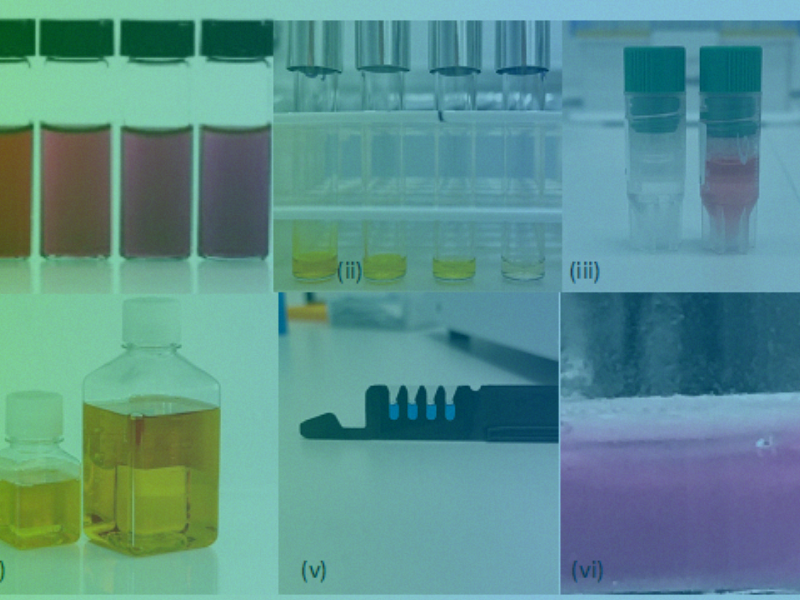

In-process endotoxin testing
Earlier insight into your process. More informed manufacturing decisions.
Endotoxin contamination can enter pharmaceutical manufacturing through raw materials, biological inputs and processing steps, as well as water.
Testing at selected points before and during production can help identify potential issues earlier, while there is still an opportunity to investigate before further time, materials and resources are committed.
CMD helps manufacturers introduce or strengthen in-process endotoxin monitoring with the αBET® System and specialist testing support.
Discuss your in-process testing needs
Endotoxin control extends beyond water quality
By the time a product reaches final testing, substantial time, materials and manufacturing capacity have already been invested.
Testing at selected stages during production can provide earlier visibility of endotoxin contamination, helping teams investigate potential issues before further processing adds cost and complexity.
In-process testing also builds understanding over time. Results across batches and manufacturing stages can help teams recognise changes, assess controls and focus investigations.
It complements final product testing as part of a wider quality control strategy.
Why introduce—and maintain—in-process testing?
-
Comparing results across selected stages can help focus investigations and assess how endotoxin levels change during processing.
-
For products where endotoxin removal is necessary, testing around relevant purification steps can help assess process performance.
-
An ongoing programme provides information to support the review of materials, process conditions and testing requirements as products and operations develop.
-
Testing relevant inputs and intermediates can reveal elevated endotoxin levels before material progresses through further manufacturing stages.
-
Earlier information can help teams assess potentially affected material before committing additional processing time, labour and valuable resources.
-
Results delivered within a useful operational timeframe can inform the next step under approved quality procedures.
Where in-process monitoring can add value
Multiple manufacturing stages create several opportunities for contamination to enter a process. Small batch volumes, valuable starting materials and time-to-patient pressures make sample consumption and turnaround particularly important.
Cell and gene therapies
1
Some samples can interfere with endotoxin assays through their optical or chemical properties. Monitoring requires an approach that can detect endotoxin reliably within the relevant matrix.
Oligonucleotides and complex formulations
2
Processes requiring endotoxin removal can benefit from testing at selected purification stages. Concentrated protein formulations may also present analytical challenges that need to be addressed during method development.
Therapeutic proteins and antibodies
3
Raw materials and manufacturing intermediates
4
Testing relevant inputs and intermediate samples can help manufacturers identify concerns before further processing. Sampling points should reflect the risks and decisions associated with each process.
Starting a programme—or strengthening the one you have?

Introducing in-process testing
Begin by identifying where endotoxin information would influence a manufacturing decision.
Consider the materials entering your process, the stages where contamination could be introduced, and the point at which a result would still allow a useful response.
The testing approach also needs to suit your sample volume, matrix and available turnaround time. CMD can help assess these requirements and explore a practical route into routine monitoring.

Improving an established programme
The value of an existing programme depends on the reliability of its results and how quickly those results reach the people who need them.
Review whether sample transport, batching, consumable costs or assay interference restrict the usefulness of your current workflow.
As products and manufacturing demands evolve, reassessing these constraints can help maintain effective monitoring and identify where additional checkpoints would provide useful information.
Make in-process testing practical with αBET®
Routine monitoring needs a testing approach that fits the pace and demands of manufacturing. Turnaround, sample consumption, analytical performance and recurring cost all influence whether a programme can be sustained.
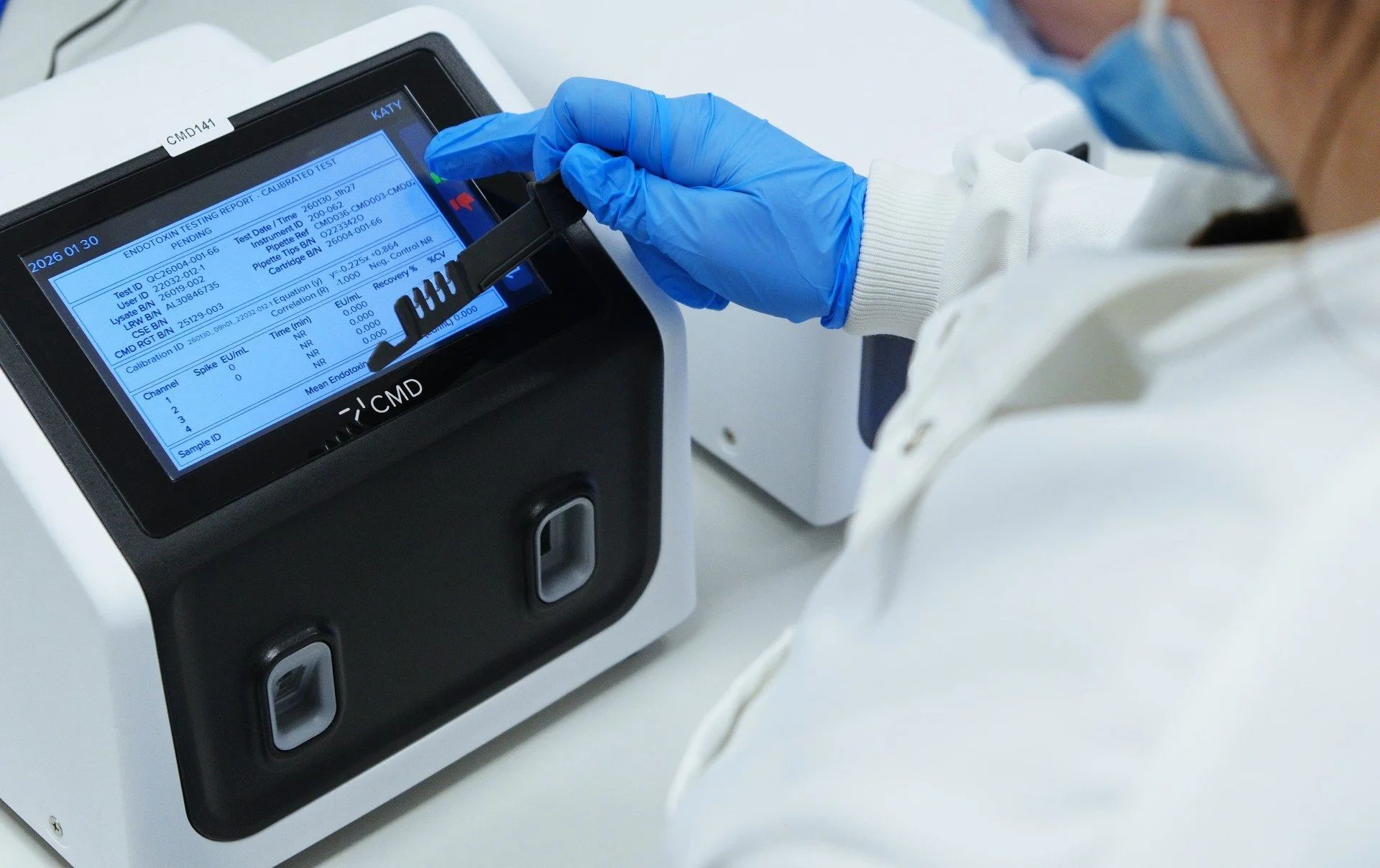
The αBET® System brings these considerations together in a compact cartridge-based platform.
Rapid quantitative results: Results available within minutes can help bring endotoxin information into the timeframe of manufacturing decisions. Time to result depends on endotoxin concentration and the assay conditions.
Detection designed for challenging samples: αBET® uses magneto-optical detection to monitor changes in the rotational behaviour of magnetic nanorod reporters as the LAL reaction progresses.
Operating in the near-infrared at 850 nm helps reduce the impact of sample colour and light scattering, supporting analysis of challenging matrices.
Reduced reagent consumption: Low reagent requirements help reduce the resources consumed by repeated testing, making routine monitoring more practical.
Flexibility within a controlled workflow: Different testing modes allow laboratories to select an approach appropriate to the intended use of the result and their approved procedures.
Optical resilience does not remove the need to establish sample-specific method suitability or investigate chemical interference and endotoxin masking.
Testing closer to the process: The compact format supports testing near the point of need, where the facility and approved workflow permit, helping reduce delays associated with moving samples elsewhere.
CMD can support method development and implementation, helping you establish a workflow suited to your application.
Build testing around your process
-
No. It provides additional information during manufacturing and complements applicable final product testing requirements.
-
Sampling points and frequency should reflect process risks, product knowledge and the purpose of the result. A focused programme should generate information that supports defined decisions.
-
A defined sampling plan, suitable analytical method, appropriate limits or action levels, and clear procedures for reviewing and responding to results.
-
Not automatically. Sample composition can change throughout manufacturing, so method suitability needs to be established for the relevant matrices.